Try our free ADHD Screening Tool Next available appointment: typically 6 to 8 weeks Book now →
A real assessment, in 8 steps

Inside a real ADHD assessment.

An honest, anonymised preview of what actually happens, from the first phone call to the GP-ready written report. Try a real screener question, see a redacted sample report, and decide whether to book without anyone needing to ring you first.

Watch a real ADHD assessment patient journey at NeuroFX Bedford

For many people, this is where things finally start to make sense.

This video shares an open and honest ADHD assessment experience with NeuroFX, from initial concerns through to diagnosis and post-diagnosis validation. It reflects the emotional reality many adults and families face before seeking an assessment, as well as the importance of being listened to and taken seriously.

Many people reach an ADHD assessment after years of self-doubt, unanswered questions, or being told they are "coping well enough." This film shares one person's honest experience of that moment, from uncertainty and hesitation through to assessment, understanding, and validation.

Full video transcript: ADHD assessment patient journey

Why I decided to seek an ADHD assessment

Hi, my name's Andy. I'm 39, and I think I might have ADHD. I also think I might have autism. This video is about finding out if either of those things are true.

I'm sure there are a couple of ex-girlfriends who would say, "Yeah, I could've told you that years ago," and friends who would think I'm overthinking everything again. But genuinely, my brain doesn't work like everyone else's.

On paper, my life is pretty good. I've got a wife, a kid, a mortgage. And yet I somehow make it stressful and difficult. My brain is constantly worrying, constantly busy. It makes me tired, distracted, and stops me getting done what I need to get done.

I think it's something to do with executive function. I want to be more present with my wife and my kid. I want the energy to play, to tidy the house, to get things done. I do manage it, but I also lose huge amounts of time hyperfocusing on the wrong things.

It's not laziness. It's not a lack of motivation. It's like the cogs are turning, but the cog that joins everything together is missing. Changing my diet, routine, exercise, none of that has helped. I just want to be the good version of me more often. I want control of my time again.

Choosing to have an ADHD assessment with NeuroFX

To find out what was really going on, I booked an ADHD assessment with NeuroFX.

It was important to me to do it face to face, so I looked for somewhere local in Bedford. After speaking with Paul, I knew it felt right. He recommended starting with an ADHD assessment first, and then considering autism afterwards if needed.

For clarity, all the shots inside the clinic were filmed after the assessment. They were keen to keep everything exactly as it would be for anyone else being assessed.

The assessment experience

Walking into the clinic felt surprisingly calm. It was more like walking into a friend's living room than a medical clinic.

Tina was warm, welcoming, and easy to talk to. It felt more like a conversation than a checklist. For a couple of hours, it was just about my life and my experiences.

She had fidget toys, which I didn't think I needed, but I later realised I play with my wedding ring constantly. I've noticed a lot more about myself since the assessment, things I wasn't conscious of before.

Overall, it was a really pleasant experience. I actually found myself craving more quiet time to talk things through.

Diagnosis and validation

After the assessment, I was diagnosed with inattentive ADHD. Tina also explained that I have strong autistic traits, which I'd secretly known for a long time.

The reason I got emotional was because this was the first time a healthcare professional had said, "Here's why you experience things the way you do." That was incredibly powerful.

For years, I'd been told my blood tests were fine, or that I probably had anxiety or depression. Deep down, I knew that wasn't the full picture. Having someone finally understand and explain it properly was hugely validating.

Life after diagnosis

I decided to try medication, and I'm currently a few weeks in. There are small glimmers of hope already.

More than anything, understanding myself has helped. I'm more accepting of who I am and why I'm that way. That alone has made a big difference to my life and my family.

If you're struggling and don't understand why, I'd recommend getting assessed. Even without medication, having clarity can really help.

About this video

I want to be upfront. I make videos for a living, and I agreed with NeuroFX that I'd make this video in exchange for the assessment.

They didn't see the video until after my diagnosis, so there was no pressure to say anything positive. Everything I've shared reflects my genuine experience.

STEP 01

Before you begin.

2 min read

"We built this walkthrough because the single most common question we hear on the first call is the same one. What is it actually like?"

This is an honest preview. Eight steps, each showing you a real part of the assessment process, narrated by Tina, our Clinical Lead. Where you can try something, you can. Where it's a real screener instrument used by clinicians, we'll tell you which one.

Nothing here is a substitute for the assessment itself. But by the end, you'll know exactly what you'd be booking, and you'll have tried the ASRS-v1.1 screen, seen a sample of the DIVA‑5 interview, and read a redacted page from a real written report.

A note on confidentiality

Everything in this walkthrough is either generic professional content or fictional/redacted. No real patient data appears anywhere. The names of the validated tools (ASRS‑v1.1, DIVA‑5) are accurate, they're published instruments used clinically across the UK.

STEP 02

Three ways to start.

5–30 minutes · No pressure

"Most people contact us when they're not yet sure they want an assessment. That's exactly the right time, and there are three ways to do it."

We've deliberately made the first step easy. No clinical screening, no qualifying questions, no pressure. Whichever route you choose, you're talking to Paul, our Director of Operations, not a clinician, by design. The first contact is a conversation about whether an assessment is the right next step, not a test of whether you qualify.

About half of the people we speak to first go on to book. The other half need something we don't offer, or aren't ready yet, and we'll tell you that honestly, both times.

Option 1 · Call us

0333 533 3303. Paul picks up, Monday to Friday, 9:00–17:30. Saturday morning too. Take as long as you need, 5 minutes or 30, your call.

Option 2 · We call you

Tell us when works and we'll call. Pick a time online, or email info@neurofx.co.uk. No clinical questions to fill in first, just space to ask yours.

Option 3 · Read first

Take half an hour with the site. The next six steps of this walkthrough, our FAQs, fees, Tina's credentials. Then decide. Our job is to make sure you book, if you book, with clear, transparent facts.

Take as long as you need to decide if now is the right time for you, or your child's assessment. No pressure, no obligation, no expectation, just honest, transparent facts.

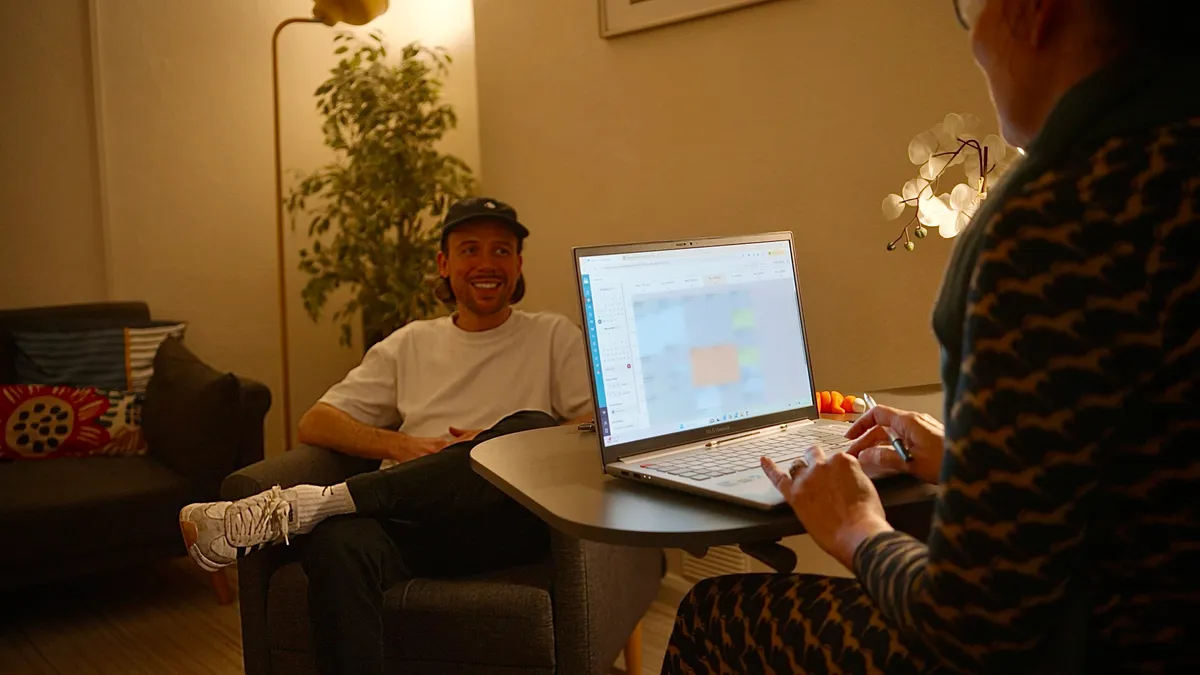
A relaxed NeuroFX assessment in Bedford: a patient sitting comfortably in an armchair while the clinician works at a laptop in a warm, softly lit consulting room.

From the first conversation onward, the priority is simple: that you feel at ease and unhurried.

STEP 03

Try a real screener question.

1 minute

"This is the actual instrument we use, and the actual scoring rule. Try it. There are no wrong answers."

Before your assessment, we send you a structured pre-assessment pack, the Adult ADHD Self-Report Scale, version 1.1 (ASRS-v1.1). It's a validated six-question screener developed by the WHO in collaboration with Harvard Medical School. Below is one of the questions, exactly as it appears in the instrument. Pick the option closest to your experience over the last six months.

Adult ADHD Self-Report Scale (ASRS-v1.1) · Question 1 of 6 (Part A)
How often do you have trouble wrapping up the final details of a project, once the challenging parts have been done?

In the real screen, you answer six questions like this one. Each scores against a threshold; four or more positive answers in Part A is clinically meaningful. You can also take the full six-question screen now if you want.

STEP 04

Arriving for your assessment.

5 minutes

"Whichever route you've chosen, in-person at Bedford or online from home, the room you walk into is calm by design."

If you've chosen in-person, you'll arrive at Bedford Consulting Rooms at 4 Goldington Road. The clinic is a calm, residential-style space, not a hospital. Reception will let Tina know you've arrived, and you'll have a quiet few minutes in the waiting area. There's water, the room is unhurried, and there's no clock counting down at you.

In-person · Bedford
A calm, residential-style consulting room. Natural light, no clinical fluorescents.

If you've chosen online, you'll receive a secure GDPR-compliant video link the day before. We test camera and audio with you in the first five minutes. The visual below is illustrative, a one-to-one, full-attention video session, not a multi-tab consultation.

An online NeuroFX assessment: a one-to-one video call between Tina and a patient.

For Cambridge online patients in particular, removing the 90-minute round trip means you arrive at the assessment less tired and more yourself, which makes a real clinical difference.

STEP 05

The DIVA‑5 interview.

~90 minutes

"This is the heart of the assessment. The DIVA‑5 isn't a test you can pass or fail. It's a structured conversation that covers eighteen specific things, in a specific order, with examples."

The DIVA-5 is the Diagnostic Interview for ADHD in Adults, fifth edition. It's the gold-standard semi-structured diagnostic instrument used by ADHD specialists across the UK and Europe. It walks systematically through the 18 DSM-5 ADHD symptoms, 9 of inattention, 9 of hyperactivity-impulsivity, in both your adulthood and your childhood.

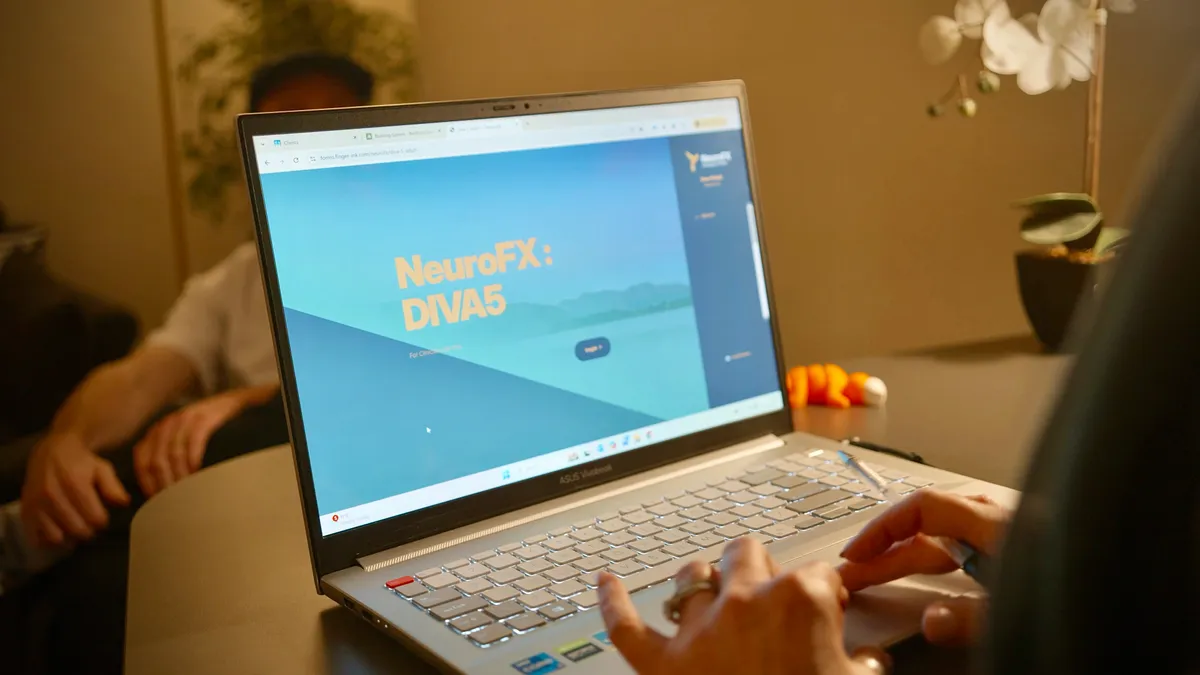
A laptop showing the NeuroFX DIVA-5 assessment tool during an in-person interview at the Bedford clinic.

The DIVA-5 is a structured, face-to-face conversation, not a tick-box form.

For each one, Tina asks you a specific question, then asks for specific examples from your real life. This is what stops the assessment being a multiple-choice questionnaire. Below is one of the eighteen criteria, exactly as it appears in the instrument.

DIVA-5 · Inattention · Criterion A1
DSM-5 ADHD Symptom A1
"Do you often fail to give close attention to detail, or make careless mistakes in your work, at school or in other activities?"
Tina's follow-up
"Can you give me a specific example from the last month? And what about when you were at school, did teachers comment on careless mistakes back then?"

We work through all eighteen criteria. We talk about what's happening in your life right now, and what happened in your childhood. We don't just want a yes or no, we want the example. That's what produces a defensible diagnostic picture rather than a tick-box exercise.

The structured interview takes around 90 minutes and is part of an assessment appointment that runs 2 to 3 hours in total. People sometimes find parts of it emotional, particularly the childhood criteria. We have tissues. We pause. We carry on when you're ready.

STEP 06

Your developmental history.

~30 minutes

"NICE guidance requires evidence of symptoms in childhood. This is the section where we build that picture, gently and at your pace."

An adult ADHD diagnosis requires evidence that symptoms began before age 12 and have persisted. So a substantial chunk of your assessment is about your childhood, not because your past is the most important thing, but because the diagnostic criteria require it.

We'll ask about school, the report cards that said you "could try harder," the homework that took five hours, the bedroom that was a permanent disaster, the friendships that came and went. We'll ask about your parents and siblings, your sleep, your eating patterns, the things you tried and abandoned. We'll ask about any childhood diagnoses or assessments.

If a parent or older sibling can help

Before your assessment, we'll ask if someone who knew you as a child can fill in a short developmental history form. A parent, older sibling, or long-term family friend is ideal. This is optional but genuinely helpful. If you don't have that available, many adults don't, we'll work with what we have.

For about half of the adults we assess, this section produces a quiet moment of realisation: "oh, that's what all of that was." For the other half, it's confirmation of what they've suspected for years. Both are valid.

STEP 07

Your same-day outcome.

~30 minutes

"Wherever possible, the conversation about what we've found happens right there, in the room. The written report follows within 14 days."

The last half-hour of the assessment is the part most clinics don't include, and it's the part our patients most often say mattered. Wherever possible, Tina shares her clinical conclusion at the end of your appointment, before you leave. Occasionally more information is needed first, and she'll tell you straight away if so. If a diagnosis is appropriate, she'll explain her reasoning, what she's seen across the DIVA-5 and the developmental history that meets criteria.

If a diagnosis isn't appropriate, she'll explain that too, what didn't meet criteria, what she thinks the picture is instead, and what might help. A clear "no" is as valuable as a clear "yes" if it gets you to the right next step.

We talk through what happens next: whether medication is something you want to consider, how the six-month titration package works if so, whether shared care with your Cambridgeshire (or other) GP is realistic, and what other support might help, psychological therapy, ADHD coaching, workplace adjustments.

What you'll leave with

A clear clinical conclusion · An understanding of why · A plan for next steps · An idea of what's coming in the written report · The reassurance that you've been heard, properly, for three hours.

STEP 08

Your written report.

Delivered within 14 days

"The report is the deliverable. It's how you'll get medication, support at work, recognition at university. We take 14 days because we write each one personally, Tina, no templates, no AI."

Within 14 days of your assessment you'll receive a comprehensive, NICE-aligned written report. It's structured for your GP to act on, suitable for DSA assessors, employers, schools, and your own records. Below is a heavily redacted preview of a real report, names, dates and personal details blanked out, structure preserved.

Adult ADHD Diagnostic Assessment Report
Tina Fox · NMC 10B1446E
NICE NG87-aligned
Report date:
1. Referral and presenting concerns

attended a private ADHD assessment at NeuroFX on , having self-referred via the clinic's first conversation route. Presenting concerns included longstanding difficulties with sustained attention, executive function and emotional regulation, particularly affecting work performance and personal relationships.

2. Assessment methodology

Assessment was conducted in accordance with NICE NG87 guidelines for the diagnosis of ADHD in adults. The assessment included: the Adult ADHD Self-Report Scale (ASRS-v1.1) completed pre-assessment; a structured DIVA-5 diagnostic interview covering all 18 DSM-5 ADHD criteria; a developmental and functional history; and a clinical formulation discussion.

3. Diagnostic outcome
Diagnostic conclusion
Attention-Deficit / Hyperactivity Disorder, combined presentation (DSM-5: 314.01 / ICD-11: 6A05.2). Criteria fully met across both adulthood and childhood domains.
4. Recommendations

a) Consideration of pharmacological treatment via NeuroFX six-month titration package or NHS shared-care; b) Workplace adjustments under the Equality Act 2010; c) Onward signposting to .

A typical report is 6–10 pages. The full structure includes pre-assessment instrument scoring, the developmental history summary, the DIVA-5 evidence for each of the 18 criteria you met (or didn't), a clinical formulation, the diagnostic outcome, and structured recommendations. The report is co-addressed to you and your GP, and we send it as a secure PDF.

That's the assessment

Now you've seen inside.

Three ways to take it further. No pressure, no obligation, no expectation, just honest, transparent facts about the process and what it means. Take as long as you need.

WhatsApp Call us Book